
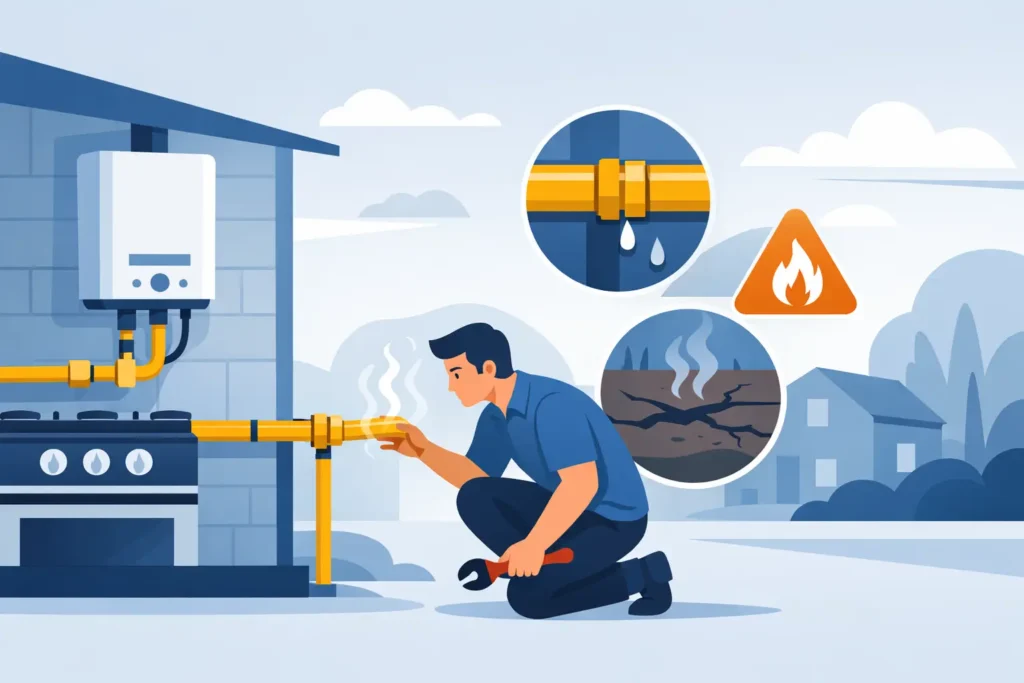
That faint rotten egg smell near the stove, water heater, or meter is not something to second-guess. If you are wondering how to spot gas line leaks, the most important thing to know is this: small warning signs can turn into serious safety risks fast.
For homeowners, property managers, and business owners in Hampton Roads, gas line issues are not a wait-and-see problem. Natural gas leaks can affect air quality, create fire hazards, and interrupt essential equipment like water heaters, furnaces, dryers, and commercial kitchen appliances. The goal is not to diagnose the entire system yourself. The goal is to recognize the warning signs early, act safely, and get a licensed professional involved right away.
How to spot gas line leaks before they get worse
Most people expect a major gas leak to be obvious, but that is not always how it starts. Some leaks begin with subtle signs that are easy to brush off, especially if the odor comes and goes or seems limited to one area.
The most common clue is the sulfur or rotten egg smell added to natural gas. Utility companies add that scent because natural gas itself is odorless. If you notice that smell indoors, around a gas appliance, or outside near your meter or buried gas line route, take it seriously.
Sound can also be a warning. A hissing or whistling noise near exposed piping, fittings, shutoff valves, or appliance connections may point to escaping gas. In a mechanical room or utility closet, this can be easy to miss if other equipment is running, so listen carefully if something smells off.
Visual changes matter too. Outside, a gas leak can cause bubbling in standing water, patches of dead or dying grass, or dirt that appears to be blowing without an obvious reason. Indoors, you may notice an unusually weak pilot light, soot buildup around a gas appliance, or a flame that does not burn clean blue. Yellow or orange flames do not always mean a gas leak, but they can signal improper combustion or another gas-related problem that needs professional attention.
Physical symptoms can be part of the picture
When people think about how to spot gas line leaks, they often focus only on the pipe or appliance. But your body can also give you clues.
If gas is leaking into an enclosed space, people inside may experience headaches, dizziness, nausea, fatigue, or eye and throat irritation. Pets can show signs too, sometimes before people do. These symptoms can overlap with many other issues, so they are not proof on their own. Still, if symptoms improve when you leave the area and return when you go back inside, that is a serious red flag.
This is one reason gas leaks in rental properties, offices, restaurants, and shared commercial buildings can be especially tricky. One person may dismiss a smell or headache while another assumes it is unrelated. When multiple signs show up at the same time, it is better to act early than explain away the pattern.
Where gas leaks commonly show up
Leaks are often found at connection points rather than in the middle of an intact pipe. Flexible appliance connectors, shutoff valves, unions, and fittings are common problem areas. Age, vibration, corrosion, accidental impact, and poor installation can all play a role.
In homes, problem spots may include water heaters, gas stoves, furnaces, fireplaces, dryers, and outdoor grills connected to a gas supply. In commercial settings, kitchens, rooftop units, boiler rooms, and equipment with frequent on-off cycling deserve extra attention.
Buried gas lines present a different challenge because you may not see the pipe itself. Instead, the signs tend to show up in the surrounding area, such as dead vegetation, disturbed soil, or an outdoor gas odor that does not go away.
What not to do if you suspect a leak
This is where safety matters most. If you suspect a gas leak, do not flip light switches on or off, and do not plug in or unplug appliances. Avoid using anything that could create a spark inside the affected area.
Do not try to locate the exact leak with an open flame. That may sound obvious, but it still needs saying. A lighter, match, or any ignition source should be kept far away.
You should also avoid relying on guesswork. Some people open a window, stop smelling gas, and assume the problem is gone. Ventilation may reduce the odor for the moment, but it does not repair the source.
What to do right away
If the smell is strong, if you hear gas escaping, or if symptoms suggest active exposure, leave the building immediately. Move everyone to a safe distance, including pets, and then contact your gas utility and emergency services if needed. Once the immediate hazard is addressed, a licensed gas fitter or qualified plumbing and mechanical professional should inspect and repair the system before it is used again.
If the signs are milder but still concerning, do not ignore them. Shut off the gas supply only if you know how to do it safely and can access the shutoff without putting yourself at risk. Then contact a licensed professional for testing and repair.
For properties in Virginia Beach, Norfolk, and Chesapeake, fast local response matters. A same-day inspection can make the difference between a contained repair and a much larger safety issue.
Can you test for a leak yourself?
There is one limited DIY step people often ask about: a soap solution test on an exposed fitting or connector. When applied to a suspected connection, bubbles can indicate escaping gas. This can be useful for confirming a concern around a visible appliance connection, but it has real limits.
It will not help with buried lines, concealed piping, multiple leak points, or combustion-related issues. It also assumes you are dealing with a minor suspected leak in a situation that is otherwise stable. If the odor is strong, the area is enclosed, or you are unsure what you are looking at, skip the DIY approach and call a licensed professional.
Professional gas leak detection is more precise and much safer. Proper testing equipment can identify leaks that are too small to detect by smell alone, and an experienced technician can determine whether the issue involves piping, fittings, shutoff components, regulators, or the appliance itself.
Why some leaks are easy to miss
Not every gas leak behaves the same way. Temperature, airflow, building layout, and appliance use can all affect what you notice. A leak may seem worse at certain times of day or only become noticeable when an appliance kicks on.
That is part of why intermittent odors should still be taken seriously. If the smell comes and goes near a furnace closet, utility room, or restaurant kitchen line, that does not mean the problem resolved itself. It may simply mean conditions changed.
Older properties can be more vulnerable, but newer installations are not automatically immune. Improper connections, settling, wear at flex lines, and equipment replacement work can all introduce problems over time.
When to call a licensed gas fitter
If you smell gas, hear hissing, see signs around a gas appliance, or notice unexplained outdoor changes near your line, it is time to call. The same goes for repeated pilot light issues, soot around appliances, or recurring physical symptoms that line up with gas use areas.
For commercial properties, the threshold should be even lower. Delaying service can put occupants at risk, interrupt operations, and create liability issues. Restaurants, offices, and multi-unit properties should treat suspected gas line concerns as urgent maintenance, not routine scheduling.
A licensed and insured professional can pressure test the line, identify the source, make code-conscious repairs, and confirm the system is safe before it goes back into service. That kind of clarity matters, especially when tenants, employees, or customers are depending on the building.
JR Plumbing & Mechanical Services LLC handles gas-related plumbing and mechanical issues with the kind of practical, safety-first response local property owners need – clear communication, experienced diagnosis, and repairs done the right way.
Prevention matters, but it is not a substitute for action
Routine inspections, proper appliance installation, and timely repairs can reduce the chances of a leak. So can paying attention to small changes before they become major problems. But prevention only works when people take early signs seriously.
If something smells off, sounds unusual, or looks different around your gas system, trust that instinct and have it checked. The safest approach is simple: notice the signs, avoid unnecessary risk, and get qualified help before a minor issue becomes an emergency.