
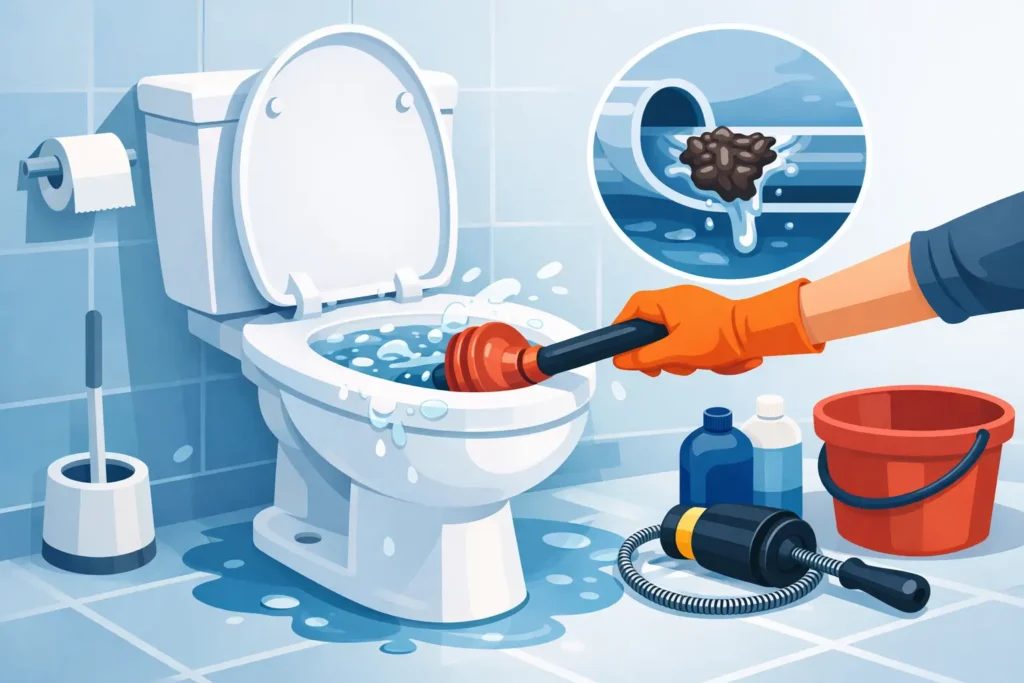
A clogged toilet usually picks the worst possible moment – before guests arrive, during a busy workday, or right when your household is already dealing with enough. If you are searching for how to fix a clogged toilet, the good news is that many common clogs can be cleared safely at home if you use the right method and avoid making the blockage worse.
The key is to slow down. Flushing again and again will not force most clogs through. It usually raises the water level, increases the chance of overflow, and turns a simple toilet blockage into a bigger cleanup. A calm, step-by-step approach works better.
How to fix a clogged toilet without making it worse
Start by checking the water level in the bowl. If the bowl is close to overflowing, take the lid off the tank and push the flapper down so more water does not enter the bowl. You can also turn off the shutoff valve behind the toilet by rotating it clockwise.
Once the water is under control, give the toilet a few minutes. Some clogs soften on their own, especially if the blockage is caused by excess toilet paper. If the water level begins to drop naturally, that is a good sign the clog may respond to a basic plunge.
Before you begin, protect the area around the base of the toilet with old towels or paper towels. Put on gloves. It is a small step, but it makes the process cleaner and easier to manage.
Start with a flange plunger
The best tool for this job is a flange plunger, not a flat sink plunger. A flange plunger has an extended rubber sleeve that seals better inside the toilet drain opening. That seal matters because plunging is about building pressure, not just pushing water around.
Place the plunger in the bowl so the rubber cup fully covers the drain. If possible, make sure the cup is submerged in water. Then push down gently to release trapped air, followed by firm, controlled plunges. Keep the seal tight and work in a steady rhythm for 15 to 20 seconds.
After several plunges, stop and see whether the water drains. If it does, flush once to test the toilet. If it still drains slowly, repeat the process. Many standard paper clogs clear after two or three rounds.
Try hot water and dish soap for a soft blockage
If plunging does not work right away, dish soap and hot water can help loosen the clog. Add a generous amount of dish soap to the bowl and let it sit for 10 to 15 minutes. Then pour in a bucket of hot water from waist height.
Hot water can help break down waste and toilet paper, but do not use boiling water. Boiling water can crack porcelain, especially in an older toilet. You want hot tap water, not water straight off a rolling boil.
This method works best on organic clogs and paper buildup. It is less effective if the blockage is caused by a foreign object, wipes, or a dense obstruction farther down the line.
When a toilet auger is the right next step
If the plunger fails and the bowl still drains poorly, a toilet auger is usually the next practical option. A toilet auger, also called a closet auger, is designed specifically for toilets. It can reach deeper into the trap and dislodge clogs that a plunger cannot move.
Insert the auger carefully into the bowl opening and feed the cable into the drain. Turn the handle slowly until you feel resistance. That resistance may be the clog. Continue turning to break it up or hook onto the material. Then pull the cable back out carefully.
This is where patience matters. Forcing the auger can scratch the bowl or damage the toilet trap. If you feel hard resistance that does not give, stop and reassess. A stuck toy, hygiene product, or other solid object may need professional removal.
What not to put in a clogged toilet
One of the most common mistakes homeowners make is reaching for chemical drain cleaner. Most store-bought drain chemicals are not a good choice for toilets. They often sit in the bowl instead of clearing the blockage, and they can damage parts of the plumbing system or create a hazard for anyone working on the toilet afterward.
It is also best to avoid improvised tools made from wire hangers or other sharp metal objects. These can chip porcelain and leave permanent marks. A proper plunger or toilet auger is safer and more effective.
Flushable wipes are another frequent cause of repeat clogs. Even products labeled flushable do not break down as reliably as toilet paper. In homes with older plumbing or heavy daily use, they can create stubborn blockages quickly.
Signs the problem may be deeper than one clogged toilet
Sometimes the issue is not the toilet itself. It may be a branch line blockage or a developing sewer line problem. That is especially true if the toilet clog keeps coming back even after it appears to clear.
Watch for a few warning signs. If multiple fixtures are draining slowly, if you hear gurgling from nearby sinks or tubs when the toilet flushes, or if water backs up in another drain, the blockage may be deeper in the system. In that case, fixing one toilet may not solve the real problem.
For property managers and business owners, recurring toilet backups should be handled quickly. A clogged toilet in a commercial setting can interrupt operations, create sanitation concerns, and lead to complaints from tenants, staff, or customers. Fast action matters.
How to fix a clogged toilet if it keeps happening
A repeat clog usually points to one of three issues: too much paper, something that should not be flushed, or a toilet that is not flushing with enough force. Older low-flow toilets can be more prone to recurring blockages, and so can toilets with mineral buildup affecting performance.
If the toilet clears but clogs again within days or weeks, pay attention to patterns. Is it one bathroom only? Does it happen after children use it? Has the flushing power become weaker over time? Those details help identify whether the problem is user-related, fixture-related, or deeper in the drain line.
In some cases, the best fix is not another plunge. It may be a professional drain cleaning, a toilet repair, or replacement of an older fixture that is no longer performing well.
When to call a licensed plumber
There is a point where continuing to try home methods costs more time than it saves. If the toilet is overflowing, if plunging and augering do not work, or if you suspect a blocked main line, it is time to bring in a licensed plumber.
That is also the right move if the clog involves a foreign object, if sewage odors are present, or if more than one restroom is affected. These situations can move from inconvenient to unsanitary quickly.
In Virginia Beach, Norfolk, and Chesapeake, many homeowners prefer same-day service for toilet backups because the risk of water damage and sanitation issues is too high to put off. For businesses, a quick response is even more important when restrooms are part of daily operations. JR Plumbing & Mechanical Services LLC handles toilet and drain issues with the kind of practical, licensed service that helps customers get the problem resolved without guesswork.
Preventing the next toilet clog
Prevention is usually simpler than cleanup. Toilets are designed for human waste and toilet paper only. Paper towels, wipes, feminine hygiene products, cotton swabs, and children’s toys are all common causes of blockage.
It also helps to be realistic about how much toilet paper your plumbing can handle at one time. In many homes, especially older ones, flushing in smaller amounts is enough to prevent repeat issues. If young children use the bathroom, a quick reminder about what can and cannot be flushed can save a service call later.
For commercial properties, preventive maintenance matters too. Restrooms in offices, restaurants, and shared facilities see heavier use, and small issues can become bigger ones fast. Periodic inspections and drain maintenance can reduce emergency calls and help keep plumbing systems working reliably.
A clogged toilet is frustrating, but it does not always mean a major plumbing failure. Start with the safest fix, use the right tools, and pay attention to signs that the issue is bigger than a simple blockage. When the toilet does not clear or the problem keeps returning, getting expert help early is often the cleanest and most affordable path forward.