
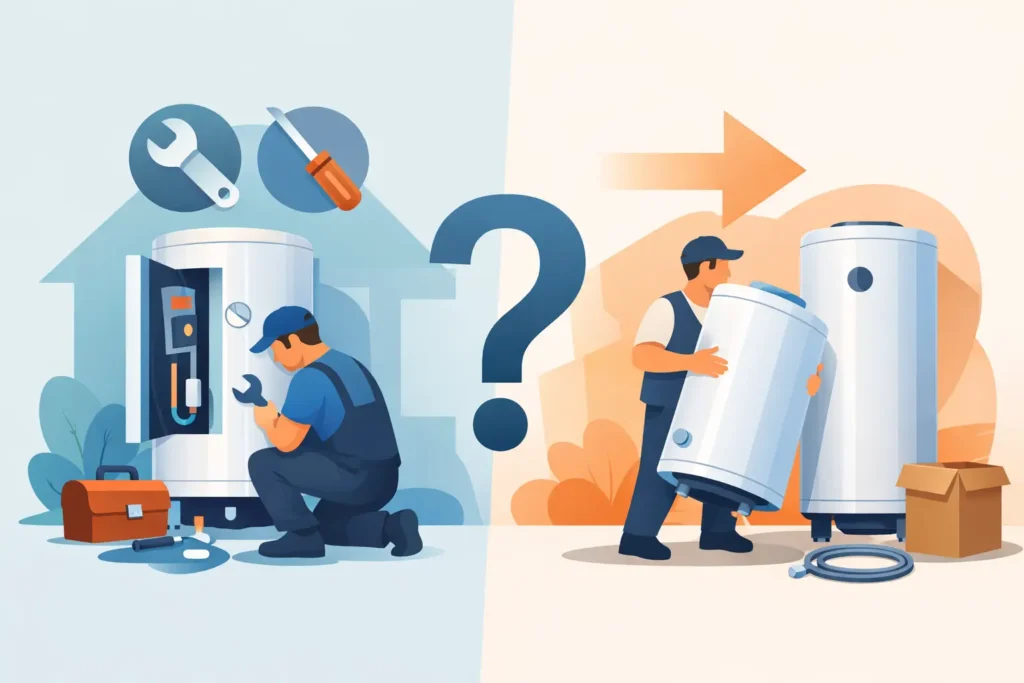
A water heater usually picks the worst possible time to act up – right before work, during tenant turnover, or in the middle of a busy day at your business. When that happens, the real question is not just how to get hot water back fast. It is deciding repair vs replace water heater problems in a way that makes financial and practical sense.
For homeowners and property managers in Virginia Beach, Norfolk, and Chesapeake, that decision often comes down to three things: the age of the unit, the type of problem, and how much more life you can realistically expect from it. A quick repair can be the right call. Other times, putting money into an aging tank only delays the next service call.
How to decide repair vs replace water heater issues
The first thing to look at is the unit’s age. Traditional tank water heaters often last around 8 to 12 years, depending on water quality, maintenance, installation quality, and how heavily the system is used. Tankless systems can last longer, but they still develop wear over time and require proper service.
If your water heater is only a few years old and the issue is isolated, repair is usually worth considering. If the unit is near the end of its expected life and showing multiple warning signs, replacement often makes more sense. That is especially true if you have already paid for one or two repairs in the last couple of years.
The type of failure matters just as much as the age. Some problems are straightforward and relatively affordable to fix. Others point to internal tank deterioration, safety concerns, or system-wide inefficiency that a repair will not solve for long.
When repairing the water heater makes sense
Not every no-hot-water call means you need a new unit. In many cases, the issue is a failed component rather than a failed water heater.
Replaceable parts can extend service life
Electric water heaters may stop heating because of a bad upper or lower heating element, a faulty thermostat, or an electrical issue. Gas models can have trouble with the pilot assembly, gas control valve, thermocouple, burner, or venting-related performance problems. These are often repairable when caught early.
A pressure relief valve that is leaking, a worn drain valve, or a minor connection issue may also be fixed without replacing the full system. If the tank itself is still in good condition, a targeted repair can restore reliable service at a lower cost than full replacement.
Repair is often reasonable for newer units
If your water heater is under 8 years old, has not had repeated problems, and the repair cost is manageable, fixing it is often the practical move. The same applies if the unit is properly sized, meets your current demand, and has otherwise performed well.
For commercial properties, repairs can also make sense when downtime needs to be minimized and the issue is limited to a serviceable component. A good plumbing assessment can help determine whether the problem is truly isolated or part of a bigger failure pattern.
When replacement is the smarter investment
Some water heater issues are not worth chasing with repeated repairs. Once the tank begins to fail internally, replacement is usually the safer and more cost-effective option.
Rust, corrosion, and tank leaks are major red flags
If you see rusty water coming from the hot side, corrosion around the tank, or visible leakage from the tank body itself, those are serious warnings. A leaking tank cannot usually be repaired in a lasting way. Once the tank shell is compromised, replacement is the right next step.
Small leaks from fittings or valves may be repairable, but water coming from the base of the heater is a different story. That usually points to tank failure. Waiting too long can lead to water damage, mold issues, or business interruption.
Older units cost more than they seem
An older water heater may still run, but that does not mean it is running efficiently. Sediment buildup, aging burners or elements, and general wear can force the system to work harder to produce the same amount of hot water. That can show up as higher energy bills, longer recovery times, inconsistent temperatures, and reduced hot water supply.
If your unit is 10 to 12 years old and needs a major repair, replacement is often the better value. You are not just paying for the repair itself. You are also accepting the risk that another part may fail soon after.
Frequent repairs usually mean the end is near
One repair in several years is normal. Multiple repairs in a short period usually mean the unit is wearing out. If you are calling for service every season, replacing the system can save money, reduce stress, and give you more reliable performance.
For landlords and business owners, reliability matters as much as raw cost. An unreliable water heater creates disruption for tenants, customers, staff, and daily operations. In that situation, replacement often pays off in reduced headaches alone.
Cost is important, but it is not the only factor
Many people approach the repair vs replace water heater decision by comparing one repair bill to one installation estimate. That is understandable, but it is not the full picture.
A lower repair cost may look appealing today, but if the unit is old and inefficient, that short-term savings can disappear quickly. You may face another breakdown, higher utility costs, or emergency replacement later under worse conditions.
On the other hand, replacing a relatively new unit for a minor issue would not be a smart use of money either. The right call depends on the condition of the tank, the parts involved, and the remaining useful life of the system.
A good rule of thumb is this: if the repair is substantial and the water heater is already near the end of its life, replacement deserves serious consideration. If the unit is younger and the fix is limited, repair is usually the more sensible option.
Signs you should not wait to call a plumber
Some warning signs need prompt attention because they can point to safety or property damage risks. Water around the unit, gas odors, unusual popping or rumbling sounds, inconsistent hot water, discolored water, or sudden pressure changes should not be ignored.
Gas water heaters also need proper venting and combustion performance. If that system is compromised, the issue goes beyond comfort. It becomes a safety matter. For commercial systems, code compliance and demand capacity add another layer of importance.
This is where working with a licensed and insured professional matters. A proper diagnosis can separate a simple repair from a failing system and help you avoid spending money in the wrong place.
Repair vs replace water heater for homes and businesses
Residential and commercial properties do not always have the same priorities. A homeowner may be focused on family comfort, monthly cost, and avoiding water damage. A business or property manager may be more concerned with reliability, tenant satisfaction, code requirements, and minimizing downtime.
That is why the best recommendation is based on actual usage, system age, and site conditions rather than a one-size-fits-all answer. In a busy restaurant or multi-unit property, even a repairable older heater may still be a poor long-term bet if hot water demand is high and any outage affects operations.
For homeowners, replacement can also be a good time to correct sizing issues. If your current heater always runs out too fast or struggles during peak use, a new unit may solve more than the immediate breakdown.
What to expect from a professional assessment
A qualified plumber should inspect the age of the unit, check for visible corrosion or leaks, test major components, review heating performance, and talk through your repair history. From there, you should get a clear explanation of what failed, what it will cost to fix, and whether the repair is likely to hold up.
That kind of honest guidance matters. At JR Plumbing & Mechanical Services LLC, the goal is not to push replacement when a repair will do. It is to help customers in Hampton Roads make a safe, cost-conscious decision with transparent pricing and dependable service.
If your water heater is acting up, the best next step is to address it before a minor issue turns into a full emergency. A timely inspection can save you from cold showers, property damage, and spending money on the wrong fix.