
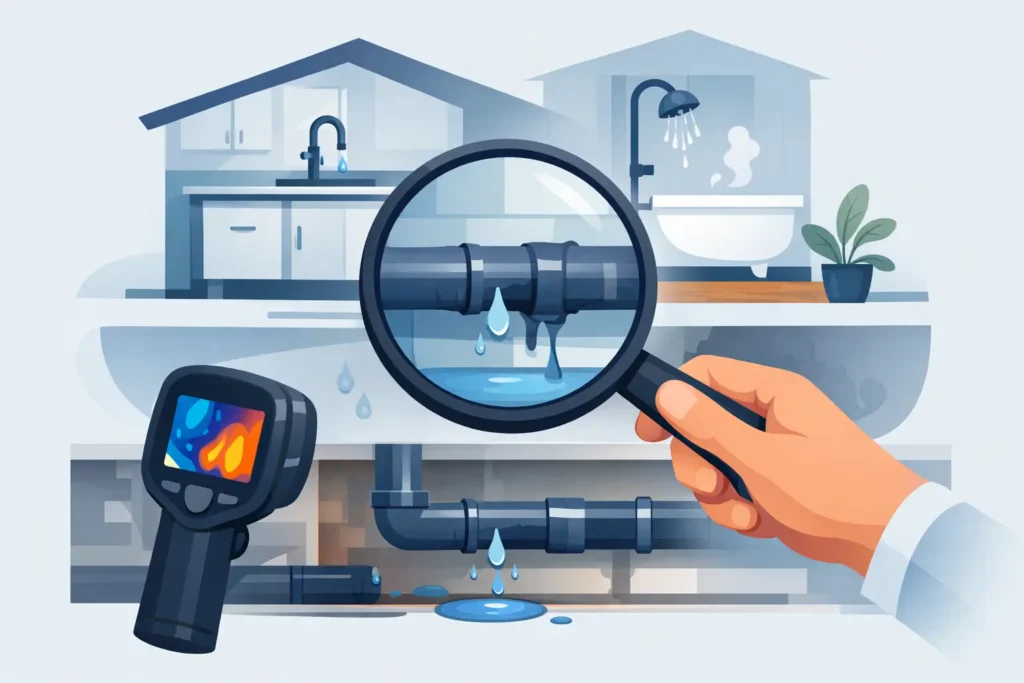
A hidden leak rarely announces itself with a burst pipe or standing water in the middle of the floor. More often, it shows up as a water bill that suddenly climbs, paint that starts to bubble, or a musty smell that does not go away. If you are wondering how to detect hidden plumbing leaks before they turn into wall damage, mold, or structural repairs, the key is knowing what small changes to watch for and when to bring in a licensed plumber.
In homes and commercial properties across Virginia Beach, Norfolk, and Chesapeake, hidden leaks often start in places people do not see every day – behind drywall, under slabs, above ceilings, or inside utility chases. The good news is that many leaks leave clues before they become major emergencies.
Why hidden plumbing leaks are easy to miss
Visible leaks are straightforward. A hidden leak is different because water can travel before it appears. A pipe may be leaking behind a bathroom wall, but the first stain might show up in the hallway. A small line leak under a slab may never produce a puddle, yet it can still waste water for weeks and weaken flooring over time.
That is why property owners sometimes assume the issue is cosmetic or weather-related. Peeling paint gets blamed on humidity. A mildew odor gets treated with cleaner. A spike in the water bill gets dismissed as seasonal usage. Sometimes those explanations are true, but not always.
The trade-off with waiting is simple: the longer a hidden leak continues, the more expensive the repair can become. Catching it early often means a more focused repair and less damage to finishes, insulation, and surrounding materials.
The most common signs of a hidden leak
If you want to know how to detect hidden plumbing leaks, start with the signals your property is already giving you. Most leaks show up through changes in moisture, sound, water use, or surface condition.
A higher-than-normal water bill is one of the clearest warning signs, especially if your household habits or building occupancy have not changed. If usage stays about the same but the bill rises, a concealed leak is worth investigating.
Musty odors also matter. Plumbing leaks trapped behind walls or under floors often create a damp smell before visible damage appears. If one room consistently smells stale or earthy, moisture may be collecting out of sight.
Stains on ceilings, walls, or baseboards are another common clue. Yellowing, dark spots, bubbling paint, soft drywall, warped trim, and loose flooring can all point to a hidden water source. In commercial spaces, ceiling tile discoloration is especially common when a line above starts leaking.
Listen, too. If you hear water running when no fixture is on, or you notice a faint hissing inside a wall, it may be more than normal pipe noise. The same goes for hot spots on the floor, which can suggest a hot water line leak under the slab.
How to detect hidden plumbing leaks at home
Homeowners can do a few simple checks before calling for service. These steps are useful because they help confirm whether the problem is active and whether it is likely tied to plumbing instead of roofing, HVAC, or outside drainage.
Check your water meter
One of the best first steps is a water meter test. Turn off faucets, dishwashers, washing machines, irrigation, and any appliance that uses water. Then check the meter and note the reading. Wait 30 minutes to an hour without using any water and check it again.
If the reading changes, water is moving somewhere in the system. That does not tell you exactly where the leak is, but it does tell you the issue is real. In many cases, this is the moment a homeowner realizes the problem is not just condensation or old staining.
Watch your fixtures and toilets
Not every hidden leak is behind a wall. Toilets can leak silently into the bowl, and supply lines under sinks can drip slowly into cabinets where damage goes unnoticed. Look for damp cabinet floors, corrosion around shut-off valves, and toilets that refill on their own.
A few drops here and there may not seem urgent, but small fixture leaks add up. They also create false confidence because the visible drip can distract from a second leak concealed nearby.
Inspect walls, floors, and ceilings carefully
Walk through the property slowly. Press lightly on areas that look stained or swollen. Check around tubs, showers, water heaters, laundry rooms, and exterior-facing walls. Look for baseboards pulling away, flooring that feels spongy, or sections of paint that are cracking for no obvious reason.
It depends on the age and layout of the property, but bathrooms, kitchens, laundry areas, and utility rooms are usually the first places to inspect because they have the most frequent water line connections.
Hidden leak detection in commercial buildings
For property managers and business owners, the challenge is usually scale. A larger building has more fixtures, more piping, and more places where water can travel before anyone sees it. Occupied commercial spaces also have a practical concern: downtime.
A restaurant may notice unexplained moisture near a prep area. An office may see ceiling stains after hours. A multi-unit property may get one complaint about damp carpet when the real source is several feet away. In these cases, quick investigation matters because hidden leaks can affect operations, indoor air quality, and maintenance costs.
Monitoring water bills, checking vacant suites regularly, and responding to minor stains or odors early can prevent broader disruption. For commercial properties, a professional inspection is often the fastest path because leak location matters as much as leak confirmation.
When the leak is behind a wall or under a slab
This is where DIY detection usually reaches its limit. You may know a leak exists but still have no clear path to the source. Cutting into drywall or breaking concrete without proper testing can create extra cost and miss the real problem.
Licensed plumbers use leak detection methods that help narrow the location before repairs begin. Depending on the situation, that may include pressure testing, acoustic listening equipment, moisture detection tools, thermal imaging, or camera inspection. The right method depends on the pipe material, building layout, and whether the leak is in a supply line, drain line, or fixture connection.
That matters because not all water damage comes from the same source. A supply line leak is typically active under pressure. A drain leak may only show up when a sink, shower, or appliance is used. A roof or HVAC issue can also mimic plumbing damage. Good diagnosis saves time and avoids unnecessary demolition.
When to call a plumber right away
Some signs should not wait. If your meter is moving with all water shut off, if you smell persistent mildew with no obvious cause, or if walls and flooring are actively changing, it is time to call. The same goes for low water pressure, hot spots on the floor, recurring stains, or any leak near electrical components.
Emergency response is especially important if you see sagging ceilings, major discoloration, or sudden drops in pressure. Those conditions can point to a more active leak and higher risk of property damage.
For homeowners, fast service can mean stopping damage before it spreads into subflooring or framing. For commercial properties, it can mean keeping part of the building operational while the issue is isolated and repaired.
How to prevent hidden plumbing leaks from getting worse
You cannot prevent every leak, but you can reduce the odds of a small issue turning into a major one. Pay attention to changes in your bill, inspect around fixtures regularly, and do not ignore slow drains, minor stains, or repeated moisture in the same area. Preventive inspections are also worthwhile in older homes, buildings with previous plumbing work, and properties with aging water heaters or pipe systems.
In Hampton Roads, humidity can complicate the picture because some moisture problems look similar at first glance. That is another reason professional diagnosis matters. The goal is not just to confirm that something is wet. The goal is to identify why.
If you suspect a hidden leak, trust the signs early. A small stain, soft spot, or unexplained bill is often the first chance to solve the problem on your terms instead of during an emergency call. For property owners who want clear answers, licensed leak detection is the most direct way to protect the building, control repair costs, and move forward with confidence.