
A drain backs up at the worst possible time – before guests arrive, during a lunch rush, or right when your tenants start calling. When that happens, the question usually becomes hydro jetting vs drain snaking: which one will actually fix the problem, not just quiet it down for a few days?
The answer depends on what is inside the line, how often the clog returns, and the condition of the pipe itself. Both methods are useful. Both have a place. But they do very different jobs, and choosing the wrong one can leave grease, sludge, or debris behind that keeps causing trouble.
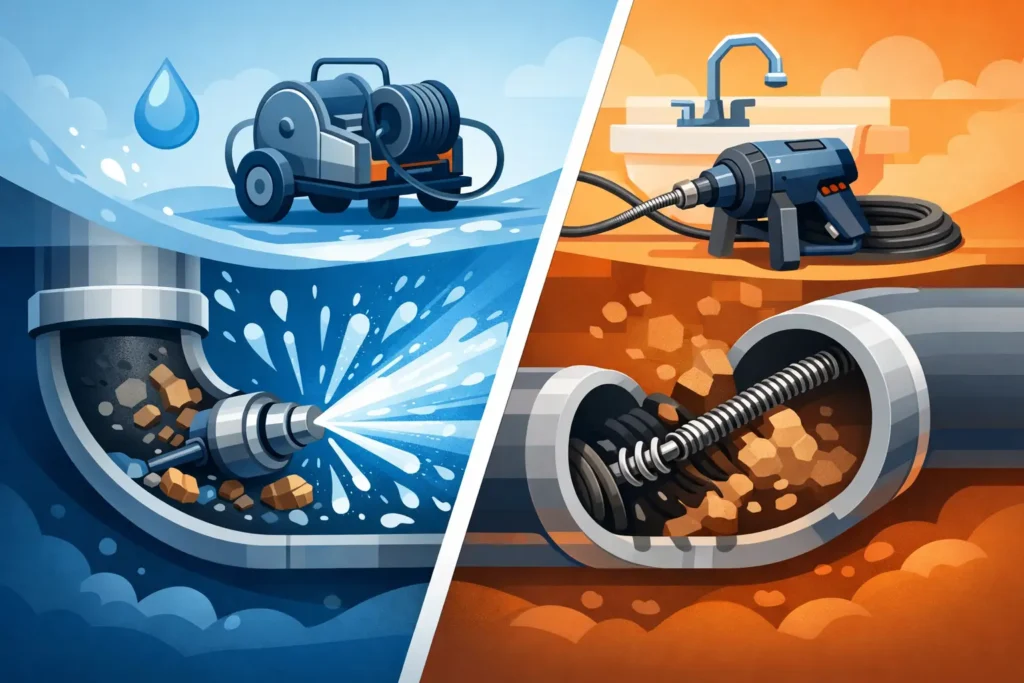
Hydro jetting vs drain snaking: the basic difference
Drain snaking is a mechanical method. A plumber feeds a cable into the drain to break through a blockage or pull part of it out. It is often the fastest way to reopen a line when the immediate goal is to get water moving again.
Hydro jetting uses highly pressurized water to scour the inside of the pipe. Instead of punching a hole through the clog, it washes buildup off the pipe walls and flushes the debris down the system. That makes it a stronger option for lines with heavy grease, soap residue, scale, or recurring buildup.
If you picture the problem inside the pipe, snaking is more like creating a path through the obstruction. Hydro jetting is more like cleaning the whole pipe interior. That difference matters, especially for older homes, busy kitchens, and commercial properties that put a lot of stress on their plumbing.
When drain snaking makes the most sense
Drain snaking is often the right first step for common stoppages. If a bathroom sink is clogged with hair, or a toilet line is blocked by paper and waste, a snake can usually clear the issue quickly and with less setup.
For homeowners in Virginia Beach, Norfolk, and Chesapeake, this can be a practical solution when the clog is isolated and not part of a bigger pattern. If the line drains normally after service and there is no history of repeat backups, snaking may be all you need.
It is also useful when a plumber needs to restore flow fast before doing further inspection. In some cases, the goal is to reopen the drain first, then determine whether deeper cleaning or repair is needed after the immediate problem is under control.
That said, snaking has limits. It may break through a soft blockage without removing the material coating the pipe walls. So while the drain works again, the underlying buildup can still be there, waiting to catch more debris.
Best uses for drain snaking
Snaking is usually a strong fit for hair clogs, small localized obstructions, and situations where the backup appears sudden rather than ongoing. It can also be a good choice for certain older or more delicate lines where a plumber wants to start with a less aggressive approach.
When hydro jetting is the better option
Hydro jetting is often the better answer when the clog is not just a single obstruction, but a buildup problem throughout the pipe. Grease lines in restaurants, kitchen drains in busy homes, and main sewer lines with recurring sludge or debris are common examples.
This is where hydro jetting stands apart. It does not just poke through the blockage. It cleans the pipe more completely, which helps reduce repeat clogs and improves flow over time.
For commercial properties, that matters even more. A line that repeatedly backs up can disrupt employees, customers, tenants, and operations. In those settings, a temporary fix may cost more in the long run than a more thorough cleaning.
Hydro jetting can also help with foul odors caused by organic buildup sitting inside the line. If your drains are slow and smell bad even after previous service, there is a good chance residue is still lining the pipe.
Best uses for hydro jetting
Hydro jetting is often ideal for grease buildup, soap scum, sediment, scale, and recurring drain issues. It is also a strong maintenance tool for commercial kitchens, multi-unit properties, and homes where older plumbing sees frequent use.
Hydro jetting vs drain snaking for recurring clogs
If the same sink, floor drain, or main line keeps backing up, hydro jetting usually deserves a closer look. Recurring clogs often mean the pipe is narrowing from buildup, not just catching one random blockage.
A snake may restore drainage each time, but if residue remains on the pipe walls, the clog cycle continues. That is why some property owners feel like they are paying for the same repair over and over. The drain was reopened, but not truly cleaned.
This is one of the clearest trade-offs in hydro jetting vs drain snaking. Snaking can be faster and less involved for simple clogs. Hydro jetting is typically more thorough for chronic problems. If the issue keeps returning, a more complete cleaning often saves frustration and service calls.
What about pipe safety?
This is where experience matters. Hydro jetting is powerful, but it is not the right choice for every system. If pipes are damaged, badly corroded, cracked, or otherwise unstable, high-pressure water may not be appropriate until the line is inspected.
That is why a professional plumber may recommend a camera inspection first, especially for older sewer lines or commercial systems with a history of problems. The goal is not just to clear a clog. It is to choose a method that solves the problem without creating a bigger one.
Snaking is not risk-free either. In the wrong hands, a mechanical cable can damage certain fixtures or pipes, especially if the blockage is misdiagnosed or the equipment is used improperly.
The safer option depends on the actual condition of the line. There is no one-size-fits-all answer, and that is exactly why professional evaluation matters.
Cost now vs value over time
Many customers naturally compare the immediate price first. In many cases, drain snaking costs less upfront. It can be the most cost-effective option when the clog is minor and isolated.
Hydro jetting may cost more initially because it is a more intensive service. But when it prevents repeated backups, emergency calls, and business interruption, it can offer better value over time.
For example, a homeowner with a one-time bathroom sink clog may not need hydro jetting at all. A restaurant with grease-heavy lines that slow down every month is in a very different situation. So is a property manager dealing with recurring sewer line complaints from multiple units.
The right question is not just, “Which costs less today?” It is, “Which solves this problem in a way that makes sense for this property?”
How plumbers decide between hydro jetting and snaking
A licensed plumber usually looks at the type of clog, where it is located, how often it happens, and the age and condition of the pipe. They may also consider whether the property is residential or commercial, whether grease or scale is involved, and whether there are signs of a larger sewer line issue.
In a simple case, snaking may be the clear choice. In a more stubborn case, hydro jetting may be recommended because it addresses the full pipe interior. Sometimes both methods are part of the process – one to restore immediate flow and another to deliver a more complete cleaning afterward.
For customers across Hampton Roads, that kind of honest recommendation matters. You want a solution based on the actual condition of the system, not a guess and not a one-method-for-every-job approach.
Which should you choose?
If the drain is clogged for the first time and the blockage appears localized, snaking is often the practical answer. If the line has a history of slow drainage, foul odors, grease accumulation, or repeat backups, hydro jetting may be the better long-term fix.
For homes and businesses alike, the biggest mistake is waiting until a manageable drain issue becomes a full backup. Early service gives you more options and can help avoid damage, downtime, and unnecessary expense.
At JR Plumbing & Mechanical Services LLC, the goal is simple: recommend the method that fits the problem, the pipe, and the property. That means clear communication, professional service, and no pushing a bigger solution when a simpler one will do.
If your drains are telling you something, listen before the next backup makes the decision for you.