
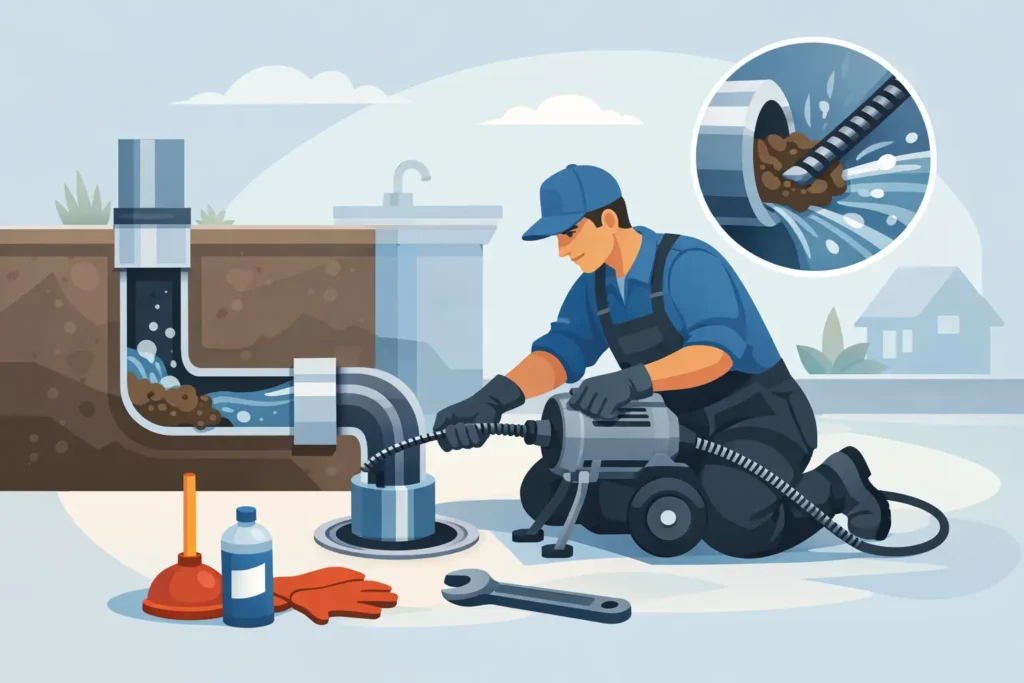
When multiple drains start backing up at once, you are usually not dealing with a simple sink clog. That is the point where homeowners start searching for how to unclog a main drain, because the problem has moved beyond one fixture and into the main line that carries wastewater out of the property.
A main drain clog can turn into a messy, expensive problem fast. Toilets may gurgle, tubs may fill with dirty water, and lower-level drains are often the first place sewage shows up. If you own a home or manage a property in Virginia Beach, Norfolk, or Chesapeake, the right response is not just about getting water moving again. It is about protecting the plumbing system, the building, and the people inside it.
Signs the main drain is clogged
The biggest clue is that more than one fixture is acting up at the same time. A single slow bathroom sink usually points to a local blockage. But if the toilet bubbles when the shower runs, or a washing machine drain causes water to rise in a floor drain, that suggests a blockage in the main drain line.
You may also notice sewage odors, standing water near a basement or garage drain, or repeated backups after plunging individual fixtures. In commercial buildings, the signs can show up as multiple restroom issues at once or wastewater problems that interfere with daily operations. The more widespread the symptoms, the more likely the main line is involved.
Before you try to unclog a main drain
Start by stopping water use in the building. Do not run dishwashers, washing machines, showers, or sinks while you are diagnosing the issue. If the line is blocked, every extra gallon has nowhere to go and can back up into the lowest drain.
Next, think safety first. Wastewater can contain harmful bacteria, and some clogs involve pressure that releases suddenly when opened. Wear gloves, eye protection, and older clothes. If sewage is already backing up indoors, it is usually smarter to stop there and call a licensed plumber.
It also helps to know the age and condition of the system. Older properties may have cast iron lines with corrosion or root intrusion. Newer homes can still have problems from grease buildup, wipes, paper products, or construction debris. The cause matters because the wrong approach can make the clog worse.
How to unclog a main drain step by step
If the backup is minor and you can safely access the line, there are a few practical steps you can take before calling for professional service.
Locate the main cleanout
The cleanout is usually a capped pipe located outside near the foundation or in a basement, crawl space, utility room, or garage. It provides direct access to the main drain line. If you are not sure which pipe is the cleanout, do not start opening random caps. A mistake there can create a much bigger mess.
Before removing the cap, place a bucket nearby and stand to the side, not directly in front of it. If the line is full, wastewater may spill out immediately. Open the cap slowly to release pressure.
Try a drain snake or auger
One of the most common ways to address a main line blockage is with a heavy-duty drain snake or sewer auger. Feed the cable into the cleanout slowly and steadily. If you hit resistance, rotate the tool to break apart or grab the clog, then continue working it through.
This can help with soft obstructions such as paper buildup or smaller masses of debris. It is less reliable for heavy grease, dense root intrusion, or collapsed pipe sections. If the cable binds hard or will not advance, forcing it can damage the line or the equipment.
Flush carefully and test slowly
Once you believe the blockage has cleared, pull the cable back out and replace the cleanout cap securely. Then test the system gradually. Start with a small amount of water at the lowest fixture and watch for proper drainage. If things seem normal, continue testing other fixtures one at a time.
Go slowly here. A clog that seems gone can still be partially blocking the line. If you immediately run a lot of water, the backup may return.
What not to do when the main line is clogged
Chemical drain cleaners are rarely the right answer for a main drain clog. They often do little against a large obstruction deep in the line, and they can create safety hazards for anyone opening the pipe afterward. They may also damage certain types of piping over time.
It is also a mistake to keep plunging individual toilets and sinks when the main drain is blocked. That may move a little water locally, but it does not solve the deeper problem. In some cases, it only adds more wastewater to a line that is already struggling.
Another common issue is assuming every clog is a DIY fix. If tree roots, pipe scale, offset joints, or a broken sewer line are involved, a hand auger is not going to solve the real cause.
When a professional is the better call
Knowing how to unclog a main drain is useful, but knowing when to stop is just as important. If sewage is backing up into the building, if the clog keeps returning, or if the cleanout is hard to access, professional service is the safer option.
A licensed plumber can identify whether the issue is a routine blockage or a more serious line problem. In many cases, the next step is a camera inspection. That shows exactly what is happening inside the pipe, whether it is grease buildup, roots, bellied pipe, corrosion, or a collapse.
For tougher blockages, hydro jetting may be the most effective solution. Unlike a basic snake that punches a hole through the clog, hydro jetting uses high-pressure water to clear debris from the pipe walls. That can make a big difference in restaurants, commercial spaces, and homes with repeated drain problems. It depends on pipe condition, though. Older or damaged lines should be evaluated before high-pressure cleaning is used.
Why main drain clogs happen
Most main line blockages build over time, even if the backup seems sudden. Grease from kitchen sinks can cool and harden inside the line. Flushable wipes are a frequent cause, even though the label suggests otherwise. Paper towels, hygiene products, and excessive toilet paper can also contribute.
In Hampton Roads, root intrusion is another common factor, especially in older neighborhoods with mature trees. Roots are naturally drawn to moisture and can work their way into tiny pipe openings. Once inside, they trap debris and reduce flow until a full blockage develops.
Commercial properties often deal with a different mix of issues. Restaurants may face grease and food waste buildup. Multi-unit properties can see repeated clogs because of higher system demand and inconsistent tenant use. Offices and retail spaces may not notice warning signs until the line is already close to failing.
Preventing the next main drain backup
The best prevention starts with what goes into the system. Keep grease, wipes, paper towels, and food scraps out of drains. For properties with older sewer lines, periodic inspections can catch buildup or root problems before they become an emergency.
If your home or facility has a history of recurring backups, preventive maintenance is usually more affordable than waiting for another overflow. A professional cleaning schedule may make sense, especially for restaurants, busy households, and commercial buildings with heavy restroom use.
It also pays to take early warning signs seriously. Slow drains in multiple areas, gurgling toilets, and sewage odors are not problems that usually fix themselves. The earlier the line is checked, the more options you have.
A practical local note for property owners
In this area, weather and aging infrastructure can put extra strain on drain systems. Heavy rain can expose existing sewer line weaknesses, and older homes may have piping materials that are more vulnerable to corrosion and root intrusion. That is one reason fast diagnosis matters.
For homeowners and property managers, the goal is not just clearing one clog. It is making sure the line is flowing properly and that there is not a hidden issue waiting to cause the next backup. A trusted local plumber with the right equipment can usually save time, reduce cleanup costs, and help prevent repeat problems. JR Plumbing & Mechanical Services LLC handles these situations with licensed, insured service and a straightforward approach that respects both urgency and budget.
If you are dealing with a suspected main drain clog, act early, use caution, and do not ignore the signs your plumbing system is giving you. A quick response now is often what keeps a drain problem from turning into a much larger repair.