
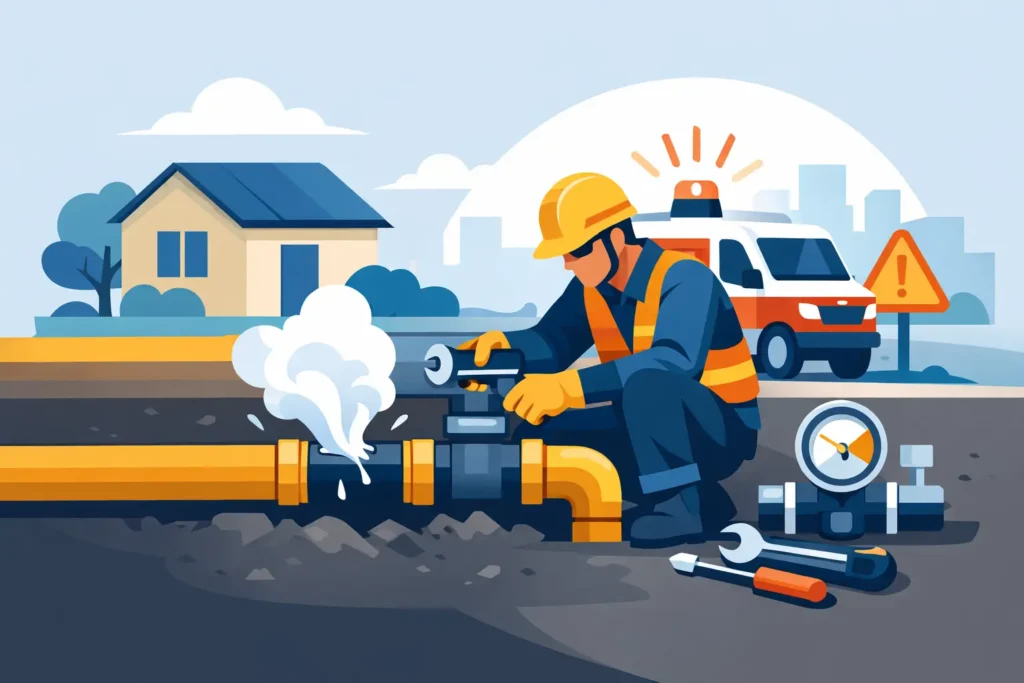
A gas smell inside your home or building is not the kind of problem that can wait until tomorrow. Emergency gas leak repair starts with fast decisions, calm action, and getting the right licensed professional involved as soon as possible.
Natural gas leaks can escalate quickly, but the first few minutes matter most. If you know what to look for and what not to do, you can reduce risk and help protect everyone on the property. For homeowners, property managers, and commercial facilities in Virginia Beach, Norfolk, and Chesapeake, the priority is always the same – safety first, repairs second.
When emergency gas leak repair is truly urgent
Some gas issues are obvious. Others are easy to second-guess. If you smell rotten eggs, hear a hissing sound near a gas line, notice a sudden drop in appliance performance, or see dying vegetation near an exterior gas line, treat it seriously.
Natural gas is treated with an odorant to make leaks easier to detect. That sulfur-like smell is there for a reason. Even if the odor seems faint or comes and goes, it should not be ignored. Small leaks do not always stay small, and indoor conditions can change fast depending on airflow, ignition sources, and where the gas is collecting.
In commercial settings, the warning signs may show up as equipment shutdowns, inconsistent burner operation, or employee reports of unusual odors near kitchens, mechanical rooms, or utility areas. In multifamily and rental properties, one unit’s complaint can point to a wider issue in a shared system. That is why emergency response needs to be prompt and methodical.
What to do immediately if you suspect a gas leak
The safest response is simple, but it has to be followed closely. Do not turn lights on or off. Do not use electrical switches, garage door openers, thermostats, appliances, or anything that could create a spark. Do not smoke, use lighters, or start a vehicle nearby if the leak may be in an attached garage or exterior utility area.
Get people out of the building right away. Once you are at a safe distance, call the gas utility and then a licensed plumber or gas fitter who handles emergency gas leak repair. If the smell is strong, if anyone feels ill, or if there is immediate danger, call 911 as well.
If you already know where the shutoff valve is and it is safe to access, shutting off the gas can help limit the hazard. But this depends on the location of the leak and whether you would need to pass through a concentrated gas area to reach the valve. If there is any doubt, leave it alone and wait for qualified responders.
Opening windows is sometimes suggested, but it depends on the situation. If windows are easy to open on your way out and you do not need to touch electrical equipment or move deeper into the affected area, it may help ventilation. If not, do not delay evacuation just to air the place out.
What a licensed professional looks for
Once the area is safe, a qualified gas fitter will start with testing and isolation. The goal is to confirm the leak location, understand how far the issue extends, and determine whether the problem is a loose connection, damaged pipe, failed flex line, appliance fault, regulator issue, or corrosion in the gas system.
This part matters because gas leaks are not always where the smell seems strongest. Gas can travel along framing cavities, utility chases, and other concealed paths. A licensed technician uses proper detection equipment, pressure testing, and experienced troubleshooting to locate the source without guessing.
In older homes and buildings, leak causes can vary. Age-related wear, movement in fittings, previous unpermitted work, outdoor line damage, and appliance replacement done without proper reconnection are all common culprits. In commercial properties, the system may also include more complex routing, larger loads, and multiple shutoff points, which makes code knowledge especially important.
Why DIY gas leak repair is a bad bet
A lot of plumbing problems can start with a homeowner noticing symptoms early. Gas leaks are different. This is not a patch-and-watch situation.
Temporary fixes like tape, sealants, or tightening visible fittings without proper testing can make the problem worse or create a false sense of security. Even if a leak seems to stop, the system still needs to be checked for pressure integrity and safe operation before gas service is restored.
There is also the issue of code compliance. Gas piping repairs have to meet safety standards, and in some cases the repair may reveal broader problems that need correction before the system can be safely put back into use. For property managers and business owners, cutting corners here can create liability far beyond the original repair cost.
How emergency gas leak repair is typically handled
After leak detection, the next step is to isolate and repair the affected section. That could mean replacing a valve, rebuilding a threaded connection, swapping out a damaged appliance connector, or removing and replacing a section of gas pipe.
Sometimes the repair is straightforward and localized. Other times, one obvious leak leads to additional findings once the line is pressure tested. That is the trade-off with older systems – the immediate issue can be fixed quickly, but the safest long-term solution may involve more than one repair.
For businesses, downtime is often part of the conversation. A restaurant with a gas supply problem may need a focused repair that gets critical equipment back online fast, but speed cannot come at the expense of safety checks. For homeowners, the concern is often whether the whole house needs to be shut down. It depends on where the leak is and how the system is configured.
A professional should verify the repair with proper testing before the gas is turned back on. Appliances may also need to be checked individually to confirm safe operation, correct pressure, and proper venting.
Common places gas leaks happen
Leaks can develop at appliance connections, shutoff valves, meter connections, exposed basement or crawl space piping, and outdoor lines affected by age or accidental damage. Water heaters, furnaces, stoves, fireplaces, and commercial cooking equipment are frequent points of concern because they involve active gas connections and regular use.
That said, the visible appliance is not always the true problem. The issue may be behind a wall, under a structure, or near a transition in pipe material. This is one reason emergency gas leak repair should always include a full assessment of the affected section, not just a quick fix where symptoms first appeared.
Preventing the next urgent call
Not every gas leak can be predicted, but some can be caught earlier with routine inspections and attention to warning signs. If an appliance has been acting irregularly, if a renovation involved moving or reconnecting gas equipment, or if your property has older gas piping, it is worth having the system evaluated before an emergency develops.
For commercial properties, preventive maintenance is often the better value. A scheduled inspection can identify worn connectors, questionable valves, unsupported piping, or code issues before they interrupt operations. For residential customers, the same principle applies – a small issue found during maintenance is usually easier to address than a late-night emergency.
Working with a licensed and insured team also makes a difference when urgency is high. In Hampton Roads, response time matters, but so does experience. A contractor who understands both plumbing and gas systems can move from diagnosis to repair with less delay and more confidence in the result. That is one reason many local customers call JR Plumbing & Mechanical Services LLC when a gas issue cannot wait.
The local factor matters more than people think
Gas leaks are not just technical problems. They are service-response problems too. When you are dealing with an occupied home, a tenant complaint, or a commercial facility that cannot stay offline, you need a company that knows the area, can respond quickly, and understands local code expectations.
In Virginia Beach, Norfolk, and Chesapeake, that local familiarity can speed up decision-making. It helps with access, permitting questions when needed, and practical coordination with property owners, tenants, and facility teams. Just as important, it gives customers a clearer sense of who is showing up and what to expect.
If you ever suspect a gas leak, trust your senses and act quickly. Leaving the area and calling for qualified help is never an overreaction when gas is involved.