
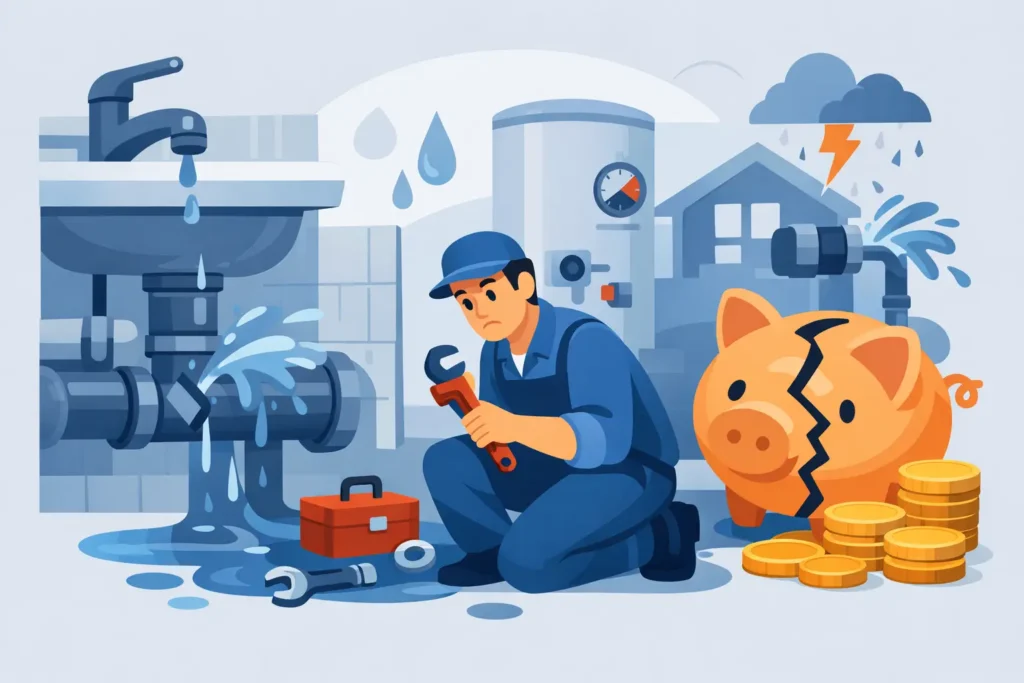
A ceiling stain, a slow drain, or a water heater that suddenly stops keeping up can look like a minor inconvenience at first. In reality, many expensive plumbing repairs begin with exactly that kind of small warning sign. By the time the problem is impossible to ignore, the repair often costs more because water has had time to spread, pressure has damaged other parts of the system, or a simple fix has turned into an emergency.
For homeowners and property managers in Virginia Beach, Norfolk, and Chesapeake, the real issue is not just the plumbing repair itself. It is the added cost of damaged drywall, flooring, cabinets, downtime, cleanup, and in some cases code-related corrections. Knowing what tends to make plumbing work more expensive can help you act earlier and make better decisions when a problem shows up.
Why expensive plumbing repairs happen
Most high-cost plumbing jobs are not expensive just because a part failed. They become expensive because of timing, access, and the amount of damage connected to the original issue. A leaking pipe behind a wall may require opening finishes to reach it. A backed-up drain line may affect more than one fixture before the blockage is cleared. A failed water heater can create both a plumbing problem and a water damage problem in the same day.
Older systems also play a major role. In many properties, especially those that have had years of piecemeal fixes, one repair can reveal another weak point. Replacing one section of pipe may be straightforward, but if surrounding lines are corroded, improperly sloped, or no longer up to standard, the scope can grow quickly. That does not mean every older system needs a full replacement. It does mean a licensed plumber has to evaluate the whole picture, not just the visible symptom.
Emergency timing raises costs too. Nights, weekends, and active leaks are harder situations by nature because the priority is stopping damage first. When water is moving where it should not, speed matters more than convenience.
The plumbing problems that often cost the most
Hidden leaks are one of the most common drivers of major repair bills. A small leak under a slab, behind a shower wall, or above a ceiling can continue for weeks before anyone sees clear evidence. By then, the job may involve leak detection, pipe repair, drywall removal, mold concerns, and fixture restoration. The plumbing portion matters, but access and secondary damage often push the price higher.
Drain and sewer line problems are another category where costs can rise fast. A simple kitchen drain clog is usually manageable if caught early. A main line blockage affecting toilets, tubs, and floor drains is different. If wastewater backs up into the property, cleanup becomes part of the problem. If tree roots, broken piping, grease buildup, or collapsed sections are involved, repair options may range from clearing the obstruction to replacing damaged pipe.
Water heater failures can be expensive in two ways. First, the unit itself may need repair or replacement. Second, a leaking water heater can damage nearby flooring, walls, and stored items. Commercial properties feel this even more because loss of hot water can disrupt business operations. Restaurants, offices, and facilities usually cannot treat hot water issues as something to handle later.
Burst or frozen pipes are obvious high-cost events, but they are not always caused by one cold snap alone. Aging pipe materials, poor insulation, pressure issues, and existing weak joints can all contribute. Once a pipe bursts, the cost is rarely limited to replacing that pipe. Water extraction, material replacement, and preventing repeat damage all become part of the conversation.
What makes one repair much more expensive than another
The location of the problem matters almost as much as the problem itself. A pipe under a sink is easier and less costly to access than a pipe inside a wall, under concrete, or above a finished ceiling. Plumbing systems are built into the structure of the property, so reaching the damaged area can take time even before the repair begins.
Materials also affect price. Some systems need specialty parts, upgraded fittings, or more extensive replacements because older materials are no longer reliable. In commercial settings, code requirements, fixture demands, and downtime pressures can add complexity. A repair in a restaurant, office, or multi-unit property has to consider occupancy, safety, and business continuity.
Another factor is whether the issue is isolated or systemic. A single failed valve is one thing. Repeated leaks, chronic drain backups, or wide-ranging corrosion suggest a broader system problem. In those cases, the lowest immediate repair price is not always the most affordable long-term choice. Sometimes a targeted replacement saves money. Other times, repeated patchwork only delays a larger bill.
How to avoid expensive plumbing repairs
The best way to reduce major plumbing costs is to respond early. If your water bill rises without explanation, a drain starts slowing down, your water heater makes unusual noise, or you notice damp spots, low pressure, or recurring clogs, it is worth getting the issue checked before it grows. Waiting does not always make a repair dramatically worse, but when it does, the difference can be significant.
Routine inspections are especially valuable for older homes, commercial buildings, and rental properties. Preventive maintenance does not eliminate every plumbing emergency, but it helps identify wear before it becomes failure. That is often where customers save real money – not by avoiding all service, but by avoiding the most disruptive kind of service.
It also helps to be realistic about temporary fixes. Store-bought drain chemicals, improvised pipe wraps, and repeated plunging may seem cheaper in the moment, but they can mask the real issue. Chemical cleaners can damage some piping. Surface-level fixes may slow a leak without addressing the failing connection behind it. There is a difference between buying time and solving the problem.
When repair is smart and when replacement makes more sense
One of the most common questions customers ask is whether they should repair the current problem or replace the affected component entirely. The honest answer is that it depends on age, condition, and repair history.
If a fixture, pipe section, or water heater is relatively new and the failure is isolated, repair often makes sense. If the system is older, has needed multiple repairs, or is causing repeated disruption, replacement may be the better investment. That is not upselling. It is a matter of avoiding repeated labor and recurring damage.
For example, clearing a blockage in a line once is routine. Clearing the same line multiple times in a short period suggests a deeper issue. Repairing one leaking section of pipe may be appropriate. Repairing several corroded sections over time may point toward repiping in that area. A good plumbing recommendation should explain both the immediate fix and the likely long-term outcome, with clear pricing so you can make an informed choice.
Why local experience matters with expensive plumbing repairs
Plumbing issues do not happen in a vacuum. Housing age, local infrastructure, commercial occupancy needs, and even seasonal weather patterns affect how repairs are diagnosed and handled. In Hampton Roads, property owners often need fast, dependable service because waiting can mean more water damage, more disruption, and more cost.
That is why licensed, insured plumbing support matters most when the repair is complex or urgent. You want accurate diagnosis, clear communication, and work that is done correctly the first time. For homeowners, that means protecting the home and avoiding repeat issues. For property managers and commercial decision-makers, it means reducing downtime, protecting tenants or customers, and staying focused on safe, code-conscious repairs.
JR Plumbing & Mechanical Services LLC works with that urgency in mind, providing practical solutions, transparent pricing, and experienced service for both residential and commercial plumbing needs across the region. When a repair has the potential to become expensive, the right response is not panic. It is getting a qualified professional involved before the damage spreads.
If something in your plumbing system feels off, trust that instinct. The earlier a problem is found, the more options you usually have, and the less likely it is to turn into a repair that affects far more than the pipe itself.