
Hot water problems usually show up at the worst time – before work, during a busy restaurant shift, or right when guests arrive. If you’re replacing an aging unit, the tankless vs traditional water heater decision matters because it affects your utility costs, installation budget, and how reliably your property gets hot water day after day.
For homeowners and property managers in Virginia Beach, Norfolk, and Chesapeake, the right choice often comes down to how the building is used. A smaller household may care most about energy savings and space. A larger home or commercial property may need stronger peak-demand performance and a practical installation plan. Both systems can work well, but they solve different problems.
Tankless vs traditional water heater: the basic difference
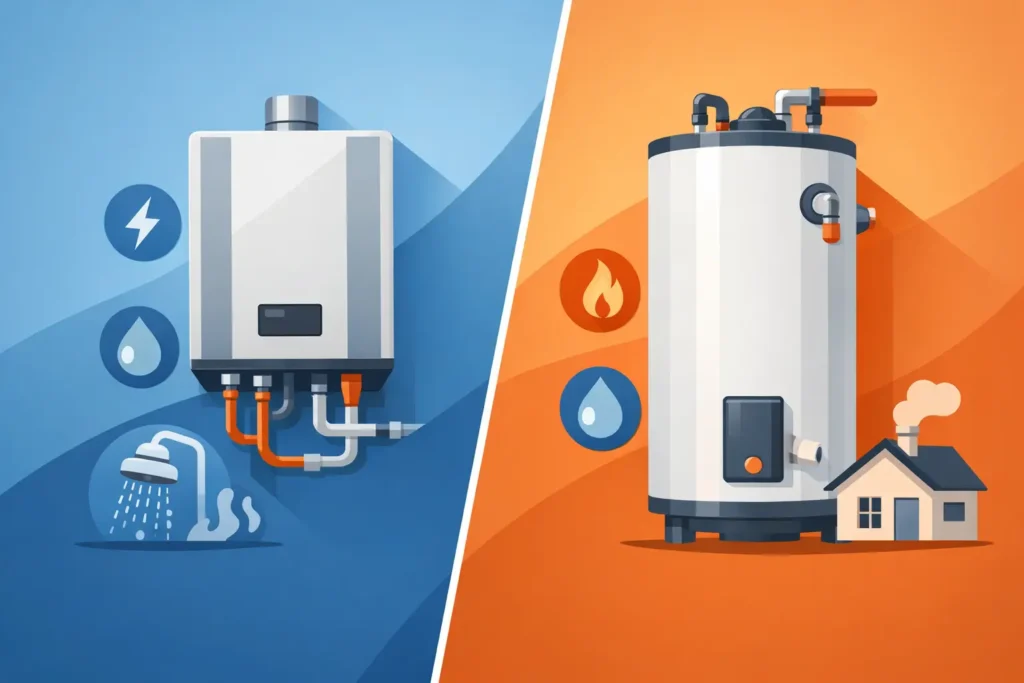
A traditional water heater stores and heats a set amount of water in a tank, usually 40 to 80 gallons. When someone turns on a faucet or shower, hot water is pulled from the tank and refilled with cold water, which then has to be heated again.
A tankless water heater heats water on demand. Instead of storing hot water, it activates when you open a hot water tap. Water passes through a heat exchanger and is warmed as it moves through the unit.
That difference sounds simple, but it affects almost everything else – operating cost, recovery time, space needs, installation complexity, and long-term maintenance.
When a traditional water heater makes more sense
Traditional tank units are still a solid choice for many properties. They usually cost less upfront than tankless systems, which makes them attractive when a water heater fails unexpectedly and the priority is restoring service quickly without stretching the budget.
They are also easier to replace in homes that already have a standard tank setup. In many cases, the connections, venting, and gas or electrical service are already built around that type of unit. That can reduce labor time and help keep installation more straightforward.
Tank water heaters also handle simultaneous use in a familiar way. If your family runs the dishwasher while someone showers and another person uses a bathroom sink, the tank provides a ready supply of stored hot water. Once that supply runs low, recovery takes time, but the delivery itself is predictable.
For some commercial spaces, a properly sized tank unit also works well where hot water use is concentrated into certain periods rather than spread continuously throughout the day.
When tankless is the better fit
Tankless water heaters are often chosen for efficiency, longer service life, and space savings. Because they heat water only when needed, they avoid the standby heat loss that comes with keeping a full tank hot around the clock.
That can help reduce energy use, especially in households or buildings where hot water demand varies throughout the day. Over time, those savings can help offset the higher initial installation cost.
Tankless units also take up less room. In tighter utility spaces, condos, smaller homes, and some commercial buildings, wall-mounted equipment can free up valuable square footage.
Another major advantage is that tankless systems do not run out of stored hot water. As long as the unit is properly sized and the demand stays within its flow capacity, it can provide a steady stream of hot water for much longer than a tank unit. That makes it appealing for households that value long showers or properties with repeated hot water use spread over the day.
Cost is not just the price of the unit
When comparing tankless vs traditional water heater options, many people focus first on the equipment price. That matters, but it is only part of the real cost.
A traditional unit is usually less expensive to buy and install. If you’re replacing a similar model, the project may involve fewer upgrades. That is one reason many homeowners choose a tank when they need same-day replacement.
Tankless systems usually cost more upfront. The unit itself can be more expensive, and the installation may require changes to gas line sizing, venting, electrical service, or water line configuration. In older homes or mixed-use properties, those changes can add up quickly.
The long-term picture is different. Tankless units are generally more energy efficient and often last longer than standard tank systems. A tank water heater may last around 8 to 12 years, while a tankless unit may last 15 to 20 years with proper maintenance. So the lower upfront price of a tank does not always mean lower cost over time.
Performance depends on demand, not just technology
One common mistake is assuming tankless automatically performs better. In reality, performance depends on sizing.
A tankless unit has a maximum flow rate. If too many fixtures call for hot water at once, the system may struggle to keep up. That is especially relevant in larger homes with multiple bathrooms or in commercial settings with simultaneous use. A poorly sized tankless heater can lead to temperature fluctuations or reduced output.
Traditional tanks have their own limits. Once the stored hot water is used up, recovery starts, and users may notice a drop in available hot water until the tank reheats. In busy households, that can mean the last shower gets lukewarm water.
This is why property size, occupancy, fixture count, and usage habits matter more than trends. The best system is the one that matches the actual load on the building.
Installation matters more than most people expect
Water heater replacement is not a one-size-fits-all job. Fuel type, venting, local code requirements, drainage, clearance, and pipe condition all affect what can be installed safely.
Traditional tanks are often simpler to swap out, but they still need correct sizing, proper shutoffs, expansion protection where required, and compliant venting. Tankless systems can be more demanding because they often need specific gas pressure, dedicated vent materials, condensate management for certain models, and careful calibration.
That is one reason professional installation matters so much. An efficient unit will not stay efficient if it is undersized, improperly vented, or installed without attention to code and manufacturer requirements.
Maintenance and reliability over time
Both systems need maintenance, just in different ways.
Traditional water heaters can develop sediment buildup in the tank, especially in areas with mineral-heavy water. Over time, that buildup can reduce efficiency, affect heating performance, and shorten equipment life. Tank flushing and anode rod checks help protect the system.
Tankless water heaters also need regular service. Mineral scale can build up in the heat exchanger, and that can reduce performance or damage components if it is ignored. Routine descaling is one of the most important parts of tankless maintenance.
Neither option is maintenance-free. The real difference is that tankless owners should be prepared for consistent preventive service if they want the unit to deliver its expected lifespan and efficiency.
What works best for homes in Hampton Roads
In Hampton Roads, the right answer often depends on the age of the property and how many people use it every day. In a newer home with adequate gas capacity and a household that wants efficiency and long-term value, tankless can be a smart investment. In an older home where the goal is reliable replacement without major modifications, a traditional tank may be the better fit.
For property managers, the decision may come down to turnover cost, maintenance planning, and tenant expectations. For commercial spaces, peak-use patterns usually matter most. A restaurant, office, or service business may need a solution based on usage timing, fixture demand, and downtime tolerance rather than equipment type alone.
A local plumbing contractor with water heater experience can evaluate those factors before installation. That kind of planning helps avoid expensive surprises and gives you a system that fits the property instead of forcing the property to fit the system.
So which one should you choose?
Choose a traditional water heater if you want a lower upfront cost, simpler replacement, and dependable performance for a typical home or light commercial setup. Choose tankless if you want higher efficiency, longer potential lifespan, and endless hot water within the unit’s rated capacity.
If you’re still unsure, that usually means the decision needs a real on-site evaluation instead of a generic recommendation. At JR Plumbing & Mechanical Services LLC, we see this often: two properties on the same street can need completely different solutions based on plumbing layout, occupancy, and daily hot water demand.
The best water heater is not the newest or the most advertised. It’s the one that gives your home or business reliable hot water, fits your budget, and keeps working when you need it most.