
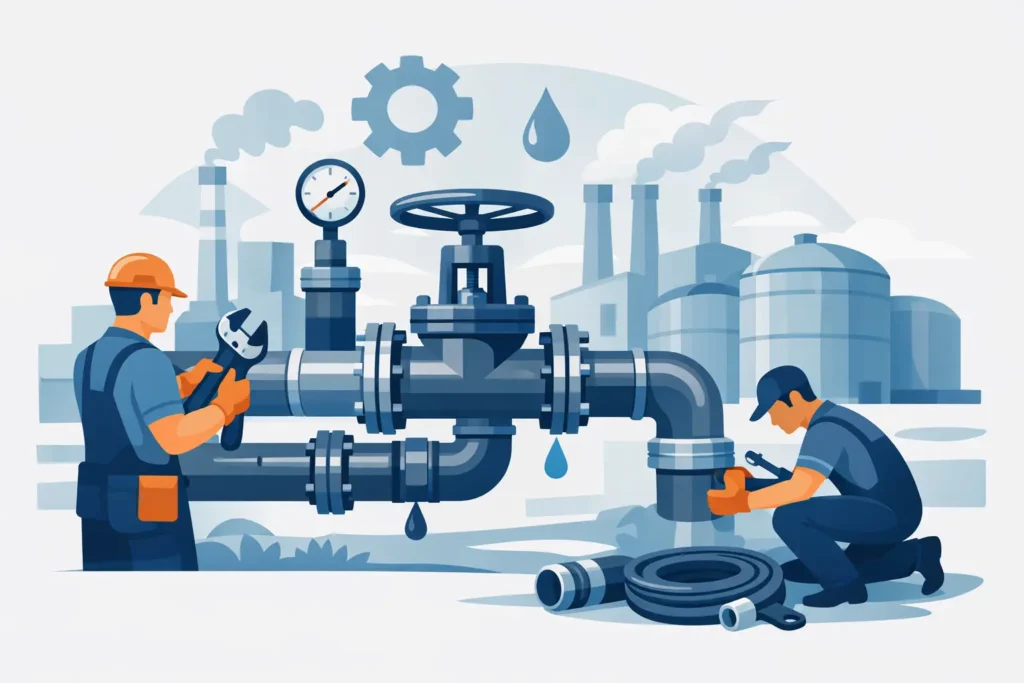
When a facility loses water pressure, a drain line backs up, or a process pipe starts leaking, the problem rarely stays small for long. Industrial plumbing solutions are about more than fixing a pipe – they protect production schedules, employee safety, equipment uptime, and code compliance.
For property managers, plant supervisors, and business owners in Virginia Beach, Norfolk, and Chesapeake, the right plumbing approach starts with speed, but it also depends on experience. Industrial systems are larger, more demanding, and less forgiving than standard commercial or residential plumbing. A quick patch may get you through the day, but if the root cause is corrosion, poor drainage design, pressure imbalance, or worn valves, the disruption usually returns.
What industrial plumbing solutions actually cover
Industrial plumbing is a broad category, and that matters because not every plumbing issue in a large facility is the same kind of problem. One building may need heavy-duty drain cleaning and hydro jetting to keep waste lines open. Another may need replacement piping, fixture upgrades for high-use restrooms, or water heater installation that can keep up with round-the-clock demand.
In practice, industrial plumbing solutions often include leak detection and repair, pipe installation and replacement, drain and toilet blockage removal, fixture replacement, hydro jetting, inspections, and preventive maintenance. In some facilities, plumbing and mechanical systems also overlap. If a building depends on hot water production, heating support, or gas-connected equipment, the contractor needs to understand how those systems affect daily operations and safety requirements.
That is where experience matters. Large facilities do not just need someone who can make a repair. They need licensed professionals who can diagnose the problem correctly, work cleanly and safely, and recommend a fix that makes sense for the building’s age, usage, and budget.
Why industrial plumbing problems get expensive fast
The cost of an industrial plumbing issue is usually not limited to the repair itself. Water damage can spread into walls, floors, inventory areas, and electrical spaces. A blocked drain can shut down restrooms or cleaning stations. A hidden leak can raise utility bills for months before anyone sees visible damage.
There is also the operational side. Restaurants, warehouses, offices, manufacturing spaces, and mixed-use facilities all feel plumbing failures differently. In a food service setting, a drainage issue can affect sanitation and force service interruptions. In an office or multi-tenant building, one leak can trigger complaints from several occupants at once. In a larger industrial environment, downtime can affect production, scheduling, and vendor commitments.
This is why many facility teams stop thinking of plumbing as a reactive service and start treating it as part of risk management. Waiting until something fails can seem cheaper in the moment, but repeated emergency calls, water waste, and avoidable downtime usually tell a different story.
Choosing industrial plumbing solutions based on the facility
No single repair strategy fits every property. The right solution depends on the age of the system, the building layout, the type of business, and how much wear the plumbing sees each day.
Older facilities often need a closer look at pipe condition and recurring leak points. Corrosion, outdated materials, and years of repairs layered on top of each other can create systems that fail in multiple places. In these cases, spot repairs may still be appropriate, but only if the overall piping network is still in workable condition. If failures are becoming frequent, replacement of sections may be more cost-effective than chasing one leak after another.
High-use properties have a different set of priorities. Restrooms, sinks, drains, and water heaters see constant demand, so reliability matters more than a bare-minimum fix. A cheap fixture that cannot handle daily traffic may create more service calls than it saves. The same goes for clogged lines. Clearing a blockage helps, but if grease, sediment, or scale buildup is recurring, hydro jetting may be the more practical answer.
Facilities with strict compliance or safety requirements need another level of attention. Plumbing work has to meet code, protect water quality, and support safe equipment operation. That calls for licensed, insured technicians who understand both the repair and the standard it needs to meet.
When emergency service is the right call
Some plumbing issues can wait a day. Others should not.
Active leaks, sewer backups, no-hot-water conditions in critical operations, overflowing toilets, and sudden pressure loss all deserve immediate attention. In industrial and commercial settings, delay increases the chance of property damage, unsafe conditions, and business interruption.
Fast response is valuable, but speed alone is not enough. Emergency work should still be handled with a clear diagnosis and a plan for permanent correction. Temporary stabilization may be necessary to protect the site, especially after hours, but the follow-up matters just as much. Otherwise, the same emergency can repeat under heavier pressure.
That is why many businesses prefer working with a local service team that offers same-day availability and knows the Hampton Roads area. A contractor familiar with Virginia Beach, Norfolk, and Chesapeake can often respond faster and understand the building types, infrastructure demands, and service expectations common across the region.
Preventive maintenance is where industrial plumbing solutions pay off
The best time to solve a plumbing problem is usually before your staff notices it.
Preventive maintenance helps catch small issues early, including minor leaks, worn fittings, slow drains, failing shutoff valves, unstable water heater performance, and signs of pipe wear. It also gives property managers a clearer sense of what needs immediate attention and what can be scheduled later.
This matters for budgeting. Emergency repairs tend to force decisions under pressure. Planned maintenance creates options. If a contractor identifies a section of pipe nearing failure, a drain line with repeated buildup, or aging fixtures that are wasting water, you can schedule the work around operations instead of around a crisis.
There is a trade-off, of course. Preventive service means spending money before a visible failure happens, and some owners hesitate because the system still appears to be working. But for facilities with heavy usage, multiple tenants, or customer-facing operations, that investment often reduces bigger costs later.
What to look for in an industrial plumbing partner
Industrial plumbing work should be handled by licensed and insured professionals with experience in both urgent repairs and longer-scope system projects. Credentials matter because these jobs affect safety, sanitation, and compliance. Just as important, the company should communicate clearly about what it found, what it recommends, and what the pricing will be before the work moves forward.
Transparency is not a small detail. Facility managers and owners need to know whether they are authorizing a short-term fix, a permanent repair, or a larger upgrade that should be phased in over time. Honest recommendations build trust, especially when the answer is not simply to replace everything.
Local service also helps. A family-run company with deep experience in the area often brings a more practical understanding of customer expectations. For many businesses and property owners, bilingual communication is another real advantage. Clear explanations in English or Spanish can make urgent decisions easier and reduce confusion during a stressful service call.
JR Plumbing & Mechanical Services LLC fits that model by combining licensed expertise, transparent pricing, same-day availability, and practical service across Hampton Roads. For customers managing both urgent issues and ongoing facility needs, that kind of consistency matters.
Industrial plumbing solutions should support the business, not interrupt it
A good plumbing contractor does more than repair what failed. The work should fit the operation. That may mean scheduling around business hours, isolating repairs to reduce disruption, recommending durable materials for high-use areas, or planning upgrades in phases so the property can keep running.
There is no single answer for every facility. Some buildings need quick corrective work and a watchful maintenance plan. Others are better served by replacing aging components before failures become routine. The goal is not to oversell a system overhaul or underplay a serious issue. It is to match the solution to the risk, the building, and the way the property actually functions.
If your facility has recurring leaks, stubborn drain problems, aging pipework, or plumbing issues that keep interrupting operations, it may be time to stop treating them as isolated events. The right industrial plumbing solutions bring stability back to the building, and that gives everyone inside it one less problem to manage.